The word calories has become so psychologically linked with the struggle of over eating that it makes many people feel anxious. But knowledge of calories (food energy) can be just as liberating as knowledge of anything else that you might fear. The answer for dealing with these fears is not to avoid them but to gradually learn to become more relaxed, more open to experiencing them in new ways, and finally to see them just as they are. Gradually learning to consider calories just as information really can be much more empowering than looking the other way, or alternatively, counting obsessively.
By embracing this knowledge about food in a mindful way, you’ll make more informed decisions around eating. Consider what might happen if you never looked at price tags while you were out shopping. Even if you were careful to purchase only what you truly needed – one pair of shoes rather than three, for instance – you might still spend more money than you earn, especially if that pair of shoes costs £150 when you only have £50.
Similarly, it’s hard to tell just by glancing at a pair of shoes how much they might cost. You might think that they’re within your budget. Then, when you check the price tag, you might be surprised. And just like everyone’s financial budget, we all have a food energy budget, but how this is set is quite complex and affected by many factors, including metabolism, activity level, and our weight.
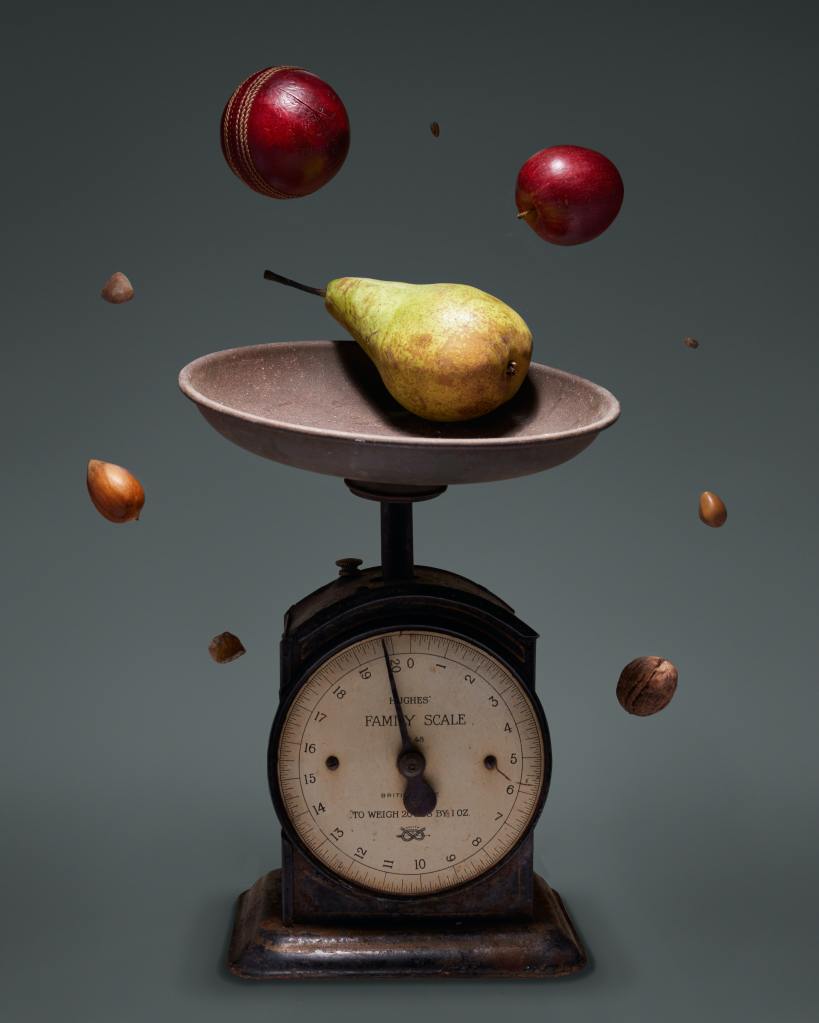
So, how many calories do you need each day? This is hard to predict as it varies substantially, as everyone is different and may vary as much as from 10 to 15 calories per kg we weigh, every day, to maintain itself. This is quite a wide range, for example, for someone who weighs 68kg, this translates into a range from 1,500 calories to 2,250 calories per day, with 1,800 in the middle. Other estimates place the average amount needed between 2,000 and 2,400 calories per day. Someone at a lower end may have a slower metabolism (they burn food energy more efficiently) and be less active (physical activity not only burns more calories, but also increases metabolism for several hours). This range doesn’t include even lower levels for a very sedentary person or higher level for a serious athlete.
Another way to think about budgeting food energy intake is to consider that, 1,800-2,000 calories works out to about 100 calories of food energy per waking hour, with some left over for sleep time. This, of course, will depend on your weight, activity level, and metabolism, but it’s a rule of thumb that can be helpful in estimating what you might need to eat to get through to the next meal without getting overly hungry and without undue worry about overeating.
Many popular diets pick a number for you, often about 1200 calories. But if your calorie need is much higher, you may feel unnecessarily ravenous on such a plan. Yes, you’d lose weight quickly, but not without significant hunger, light-headedness, and frequent cravings. In addition, while you’d know how to eat the way the diet requires, you wouldn’t know how to eat your new dietary maintenance goal level of perhaps 1800 – 2000 calories.
Even if you did know your goal number for sure – based on your metabolism and level of activity – it’s not realistic or even necessary to expect yourself to consume the same number of calories every single day. Holding yourself to inflexible rules (only 400 calories per meal, for example) will lead to your inner child eventually rebelling and potentially binging. It also doesn’t teach you how to be both flexible and balanced. You can consume 2000 calories some days and 1400 others and still lose weight. Just like budgeting, you don’t have to spend the same amount every day. But, to lose weight, it has to average out over every few days to fewer calories than your body needs at your current weight.
So, how do you find the right amount to aim for to lose weight? It’s a lot simpler than may think. All you need to do is this: Eat less than you are currently eating. Rather than focusing on a predetermined number of calories, try looking for opportunities to remove up to 500 daily calories from what you’re currently eating. This is called the 5oo-calorie challenge. Over a week, those daily opportunities to cut 500 calories equal 3500 fewer calories per week. Which can lead to significant weight loss depending on your activity, metabolism and genetics.
You might choose to have a smaller bowl of cereal in the morning, not add the mayonnaise to your sandwich or consume a small portion at dinner, less butter on potatoes or say no to the dessert.
Ref: The Joy of half a cookie by Jean Kristeller, PhD
By starting to get familiar with food labels you will begin to get an idea of the amount of calories you are consuming and the best places to reduce your calories from. Below is a list of what to look for on food labels so we can start making informed choices.
- Check the serving size, that way you will know how much to consume. You may need to weigh a portion on some scales to start with so you can be accurate.
- Check the calories per serving. Sometimes you’ll also see calories per 100g but focus on the calories per serving as that is the amount you will be consuming (using up of your budget).
- Check the amount of Protein, higher protein foods tend to leave you fuller for longer and are generally good for your health.
- Check the fat content, whilst healthy fats like olive oil and nuts are good for us they can be pretty high in calories and easily over consumed.
- Check the carb content and fibre, we should be aiming to eat around 30g of fibre a day.
- Finally, if a food contains Trans fats or partially hydrogenated fat, try to avoid these as that have a detrimental affect on our health.
If you enjoyed this article view more here https://hollyskinnernutrition.com
 Holly Skinner.