Why do we resist the very things that can make our lives better? It doesn’t seem to make sense, yet it’s something that so many of us struggle with.
Our day to day lives contain hundreds of little habits – small things like brushing our teeth, switching off a light, going to bed – that we perform without thinking. These are learned actions that we’ve acquired as we have developed, and they form part of our personality, our outlook on others as well our view of ourselves. If you pay close attention to your day to day activities you’ll probably find that they don’t differ that much from one day to the next.
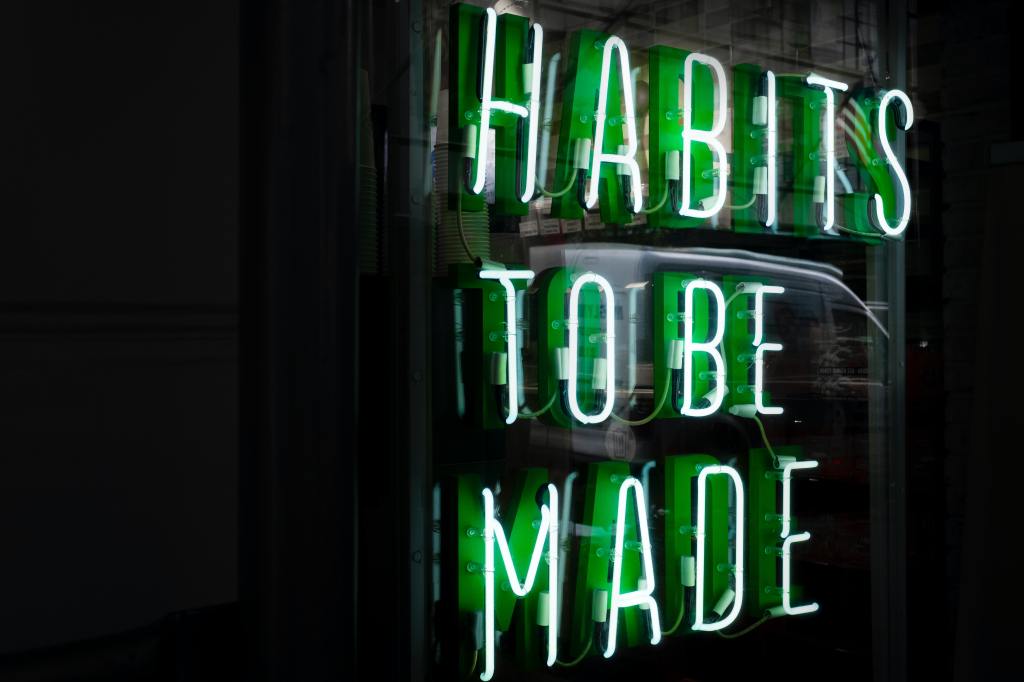
Neuroscientists now understand that habit-forming happens in a part of the brain called the Basal Ganglia. Decision making is taken care of by a different part of the brain – the prefrontal cortex. However – as soon as a behaviour becomes automatic, the prefrontal cortex stops its work and takes a breather. This is where the problem can arise – because these two parts of the brain can end up fighting for control. Decision making verses ingrained habits. Conscious choices versus unconscious response. This can be positive – driving a car, for instance, relies on a number of habitual, learned movements all working together. But it doesn’t always work in our favour – repeating bad habits, things that don’t make us feel good but that we fall back on when we are stressed, or tired leads to feeling frustrated, stuck in a rut and unable to move forwards.
So how do we make a new habit stick?
MAKE A NEW HABIT STICK
- Decide on a goal that you would like to achieve for your health.
- Choose a simple action that will take you towards your goal which you can do on a daily basis.
- Plan when and where you will do your chosen action. Be consistent: choose a time and place that you encounter every day of the week.
- Every time you encounter that time and place, do the action.
- It will get easier with time, and within 10 weeks you should find you are doing it automatically without even having to think about it.
- Congratulations, you’ve made a new habit!
Some people find it helpful to keep a record while they are forming a new habit. A daily tick-sheet can be used until your new habit becomes automatic. You can rate how automatic it feels at the end of each week, to watch it getting easier.
If you enjoyed this article view more here
 Holly Skinner.
One response to “6 steps to building better habits”
[…] 6 steps to building better habits […]
LikeLike