According to the National Institutes of Health, top plant sources of protein include:
- Almonds
- Black beans
- Garbanzo beans
- Hazelnuts
- Kidney beans
- Lentils
- Peanuts
- Peanut butter
- Split peas
- Sunflower seeds
- Pinto beans
- Tempeh
- Tofu
- Walnuts
You don’t need to eat complementary proteins together at every meal. As long as you get a variety of proteins throughout the day, you’ll get ample amounts of each amino acid. But, if you are looking to combine them to be sure of hitting your protein, here are some ways to combine your complementary proteins.
Grains and legumes:
- Black beans and rice
- Pasta and peas
- Wholewheat bread and peanut butter
- Bean soup and crackers
Nuts and seeds plus legumes:
- Roasted nuts, seeds and peanuts
- Hummus (chickpeas and tahini)
- Lentils and almonds
Sources of Grains:
- Barley
- Millet
- Rye
- Corn
- Brown rice
- Whole wheat bread
- Oats
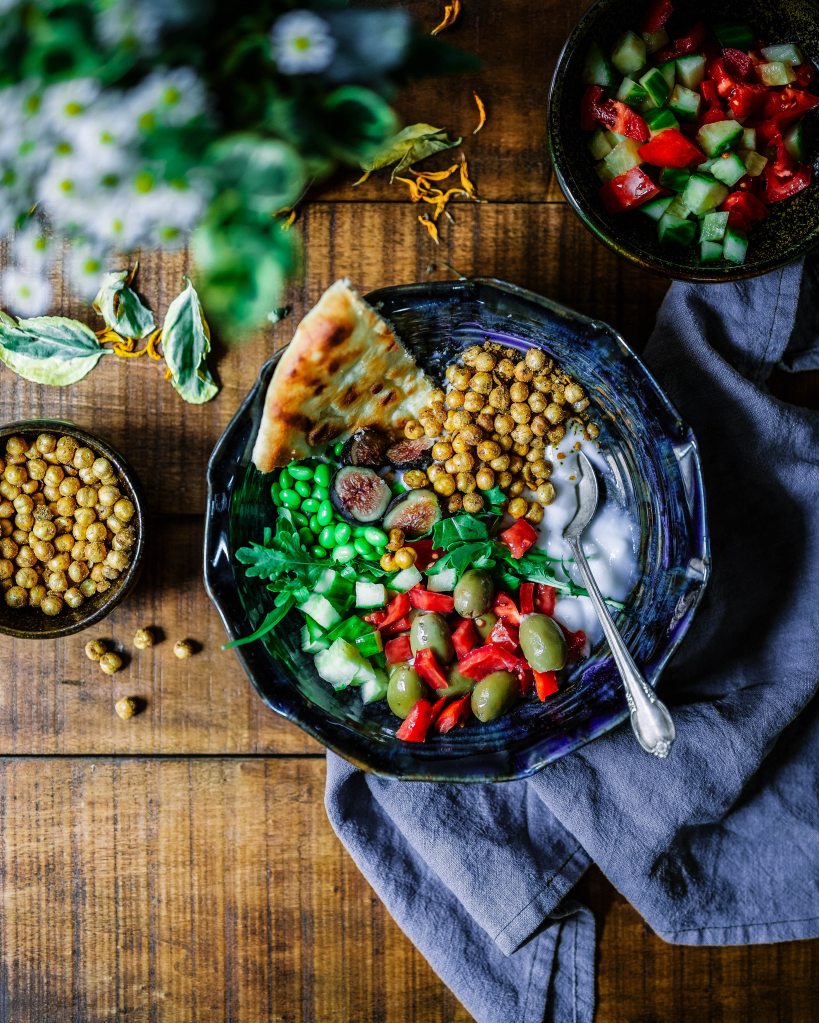
Plant-Based Complete Proteins
Soy is one plant protein that contains all the essential amino acids. It’s also a good source of healthy fats and phytochemicals (plant chemicals that may be good for you). It’s usually served as tempeh or tofu, adding soy milk can also be a good source.
Amaranth, quinoa, hempseed, and chia are also complete proteins, so adding any of these foods, along with combining your other protein sources, will help you get all your essential amino acids met every day.
Vitamin B12 is an essential vitamin for us to consume. found in shellfish, fish and dairy, fortified products, as well as trace amounts found in Spirulina. We need around 1.5mg per day to avoid a deficiency. Symptoms of a deficiency – fatigue, feeling faint, breathlessness, headaches. If you are consuming solely plant foods it may be a good idea to supplement.
Iron is an essential mineral that can be difficult for vegetarians and vegans to obtain enough of. Females need around 14.8mg per day, males slightly less at 8.7mg. Found in leafy green vegetables, nuts and legumes. Soaking or cooking nuts increases availability. Add a source of vitamin C, like fresh peppers will help to increase absorption. The symptoms of a deficiency are fatigue, tiredness, dizziness, paleness and can lead to anaemia especially in females. Supplementing could be helpful id you suspect a deficiency, however a blood test will be the best way of being certain if a deficiency is the cause of your symptoms.
If you enjoyed this article view more here
 Holly Skinner.